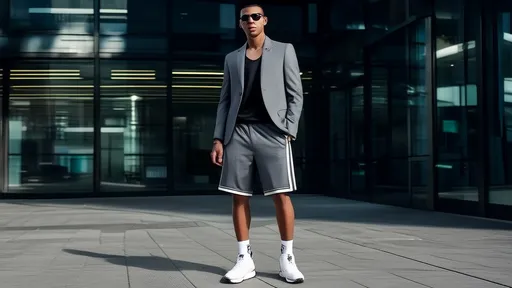
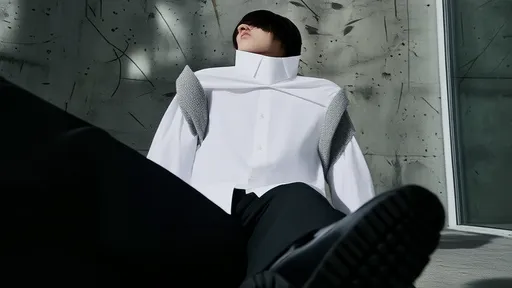
The intersection of athletic wear and formal attire has long been a sartorial tightrope walk, but the recent trend of pairing basketball shorts with tailored blazers has emerged as a surprisingly viable hybrid. This unlikely marriage of comfort and sophistication challenges traditional dress codes while offering a fresh perspective on contemporary menswear. As workplaces relax their sartorial standards and streetwear continues to influence high fashion, this bold combination has gained traction among style-forward professionals and creatives alike.
The Cultural Shift Behind the Trend
Urban fashion's infiltration into corporate environments didn't happen overnight. The gradual acceptance of sneakers with suits, visible tattoos in boardrooms, and now athletic shorts with structured jackets reflects broader societal changes. Silicon Valley's hoodie-clad executives and Gen Z's rejection of stuffy formality have collectively dismantled decades-old dress norms. Basketball shorts, once confined to courts and gym bags, now carry the same cultural weight as traditional tailored garments when styled intentionally.
What makes this pairing work is the careful balance of proportions and fabrications. The key lies in selecting basketball shorts with clean lines and minimal branding—think solid colors or subtle tonal patterns rather than team logos or neon accents. Pair them with a well-structured blazer in complementary tones; a navy unstructured blazer with charcoal shorts creates visual harmony while maintaining professional polish. The magic happens in the tension between the relaxed lower half and the crisp upper half, creating what stylists call "calculated dissonance."
Fabric Considerations for Professional Settings
Not all basketball shorts translate equally to hybrid dressing. The shiny nylon of traditional performance wear reads as overtly athletic, while matte fabrics like premium cotton blends or technical twills bridge the gap between court and conference room. Similarly, the blazer's construction matters immensely—unlined or half-lined jackets with minimal shoulder padding maintain the outfit's fluidity without sacrificing structure. Italian mills have begun producing "performance wool" blends specifically designed for these hybrid looks, offering the breathability of athletic fabrics with the drape of traditional suiting.
The footwear choice becomes the stylistic anchor in these ensembles. While high-top sneakers might push the look too far into streetwear territory for conservative environments, sleek low-profile trainers in leather or suede provide adequate support without compromising professionalism. Alternatively, some fashion risk-takers have successfully paired the shorts-and-blazer combo with Chelsea boots or even monk straps, creating an intriguing dialogue between sport and sophistication.
Corporate Culture and the New Dress Code Calculus
Adoption of this trend varies significantly by industry and geography. Creative fields like advertising, tech startups, and design firms have embraced the look most enthusiastically, while more traditional sectors like finance and law remain hesitant. However, even in conservative environments, modified versions featuring longer, Bermuda-length basketball shorts and traditional dress shirts (rather than t-shirts) have gained quiet acceptance for casual Fridays or summer months.
Global fashion capitals have each put their distinctive spin on the trend. In Milan, the look skews tailored with shorts hitting precisely at the knee and blazers nipped at the waist. Tokyo's avant-garde take might incorporate techwear elements like cargo pockets or harness details. Meanwhile, Los Angeles practitioners favor an oversized blazer with cropped shorts, often in unexpected color combinations like sage green with terracotta.
Seasonal Adaptations and Layering Techniques
While the basketball-shorts-blazer combo originated as warm-weather dressing, innovative layering has extended its viability across seasons. Winter iterations might incorporate merino wool turtlenecks beneath the blazer or pair the shorts with over-the-calf dress socks and loafers. Transitional seasons allow for lightweight scarves or unbuttoned overshirts between the shorts and blazer, adding visual interest while maintaining the outfit's essential proportions.
Accessorizing these hybrid looks requires restraint. A minimalist watch or thin chain necklace can elevate the ensemble without clashing with its sporty elements. Bags should lean structured—a sleek briefcase or minimalist backpack in premium leather keeps the look intentional rather than haphazard. The most successful executions maintain at least three traditional menswear elements (like a proper blazer, leather shoes, and metal accessories) to balance the athletic components.
The Psychology of Disruptive Dressing
Beyond aesthetics, this trend speaks to deeper cultural currents. In an era where personal branding matters as much as professional qualifications, clothing becomes a powerful communication tool. The basketball-shorts-blazer combination signals confidence, creativity, and comfort with risk-taking—qualities increasingly valued in leadership positions. It represents what sociologists term "status fluidity," the ability to move seamlessly between different social contexts while maintaining authenticity.
Fashion historians note parallels between this trend and earlier sartorial rebellions like the 1980s power suit or 1990s business casual revolution. What makes the current moment distinct is the complete dissolution of traditional fashion hierarchies—luxury brands now collaborate with sportswear giants, and runway shows feature models in looks that would have been unthinkable a decade ago. The basketball-shorts-blazer pairing exemplifies this cultural moment where all style signifiers exist on equal footing, waiting to be remixed by individual expression.
As with any bold fashion statement, successful execution requires commitment. Half-hearted attempts with ill-fitting components or mismatched styling undermine the look's potential. Those who wear it best understand that true style innovation happens at the intersection of confidence and intentionality—whether that means pairing $20 gym shorts with a $2,000 bespoke blazer or finding the perfect vintage jacket to offset contemporary performance fabrics. The rules, much like the shorts themselves, have become wonderfully flexible.
In the dimly lit back room of an unassuming boutique in downtown London, a forensic expert kneels beside a bloodstained cashmere scarf, inhaling deeply. This isn't some macabre ritual—it's the cutting edge of crime scene investigation. The newly launched Scent Forensics Unit at Harrod's flagship store has pioneered an olfactory investigation technique that's rewriting the rules of retail security.
The rhythmic clatter of wooden looms once echoed through Kyoto's Nishijin district like a heartbeat, a sound woven into the city's cultural DNA for over twelve centuries. But these days, the heartbeat grows faint. Nishijin's legendary brocade – the dazzling Nishijin-ori textiles that adorned samurai and graced imperial courts – faces an existential crisis far more complex than any economic downturn. The real threat lies in a generational gamble unfolding in quiet weaving workshops: an aging master weaver glances at his empty tea cup, wondering if his intricate craft will die with him.
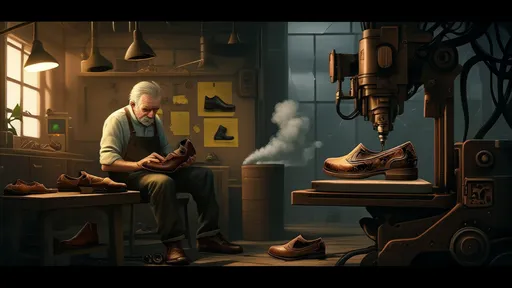
The cobbled streets of Italy’s historic shoemaking districts have long echoed with the rhythmic tapping of hammers and the quiet hum of artisans at work. For generations, the country’s shoemakers have prided themselves on crafting footwear by hand, each stitch and cut a testament to centuries of tradition. Yet today, that legacy faces an existential threat—not from globalization or fast fashion, but from an unexpected disruptor: 3D printing.
The narrow alleys of Jaipur’s old quarter hum with the rhythmic tapping of wooden blocks dipped in dye. For generations, artisans have practiced the ancient art of bandhani, the traditional Indian tie-dye technique that transforms plain fabric into intricate patterns. Yet today, the vibrant hues that once flowed from natural indigo, pomegranate peel, and turmeric are increasingly replaced by the synthetic blues and reds of chemical vats. This shift marks more than a change in materials—it threatens to unravel a cultural legacy woven into the very fabric of India’s identity.
The Scottish tartan, with its vibrant crisscrossing lines and rich hues, has long been a symbol of cultural identity and heritage. Yet beneath its colorful surface lies a simmering legal and ethical debate: when does the adoption of tartan patterns by global fashion houses and commercial entities cross the line from appreciation to appropriation? The so-called "Tartan Wars" have ignited discussions far beyond the Highlands, challenging legal frameworks and cultural sensitivities alike.
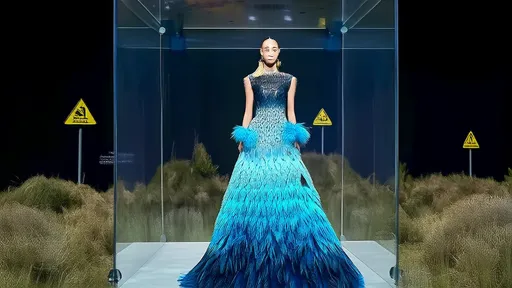
The fashion industry has long been synonymous with luxury, creativity, and opulence. Yet, beneath the shimmering surfaces of haute couture runways and glossy magazine spreads lies a darker narrative—one that involves the alarming decline of avian species due to the demand for exotic feathers. As conservationists sound the alarm on the irreversible damage caused by feather harvesting, the tension between high fashion and endangered species protection has reached a critical point.
In the intricate dance of power and perception, few accessories speak as loudly as the necklace. From the boardrooms of Manhattan to the royal courts of Europe, the length of a necklace has long been observed as a subtle yet potent indicator of authority. This unspoken sartorial code – what style insiders now call The Game of Necklaces: The Length Equals Power Rule – reveals how centimeters can translate into commanding presence.
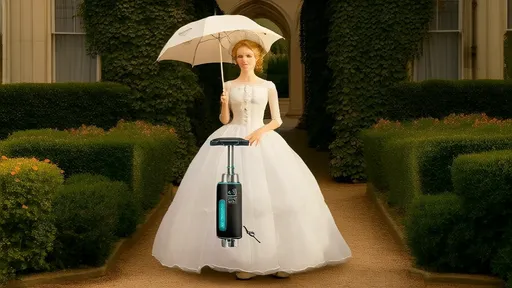
The fashion industry has always been a realm of illusion, where silhouettes are sculpted not just by fabric but by carefully engineered structures beneath. Among these hidden architectures, the volumetric fraud of inflatable skirt supports—cloaked in what designers coyly term "invisible technology"—has emerged as one of the most intriguing (and quietly controversial) innovations in contemporary couture. What began as a whimsical experiment in avant-garde ateliers has now infiltrated mainstream retail, leaving consumers and critics alike to grapple with the literal and metaphorical air at the heart of modern dressing.
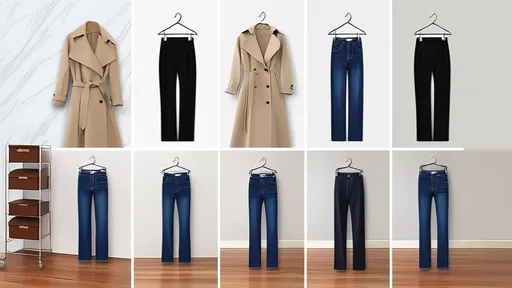
The concept of a capsule wardrobe has taken the fashion world by storm, offering a minimalist approach to style without sacrificing versatility. At its core, the idea revolves around owning fewer pieces that can be mixed and matched to create multiple outfits. But what happens when you push this philosophy to its absolute limit? Imagine having just two key items and making them work for seven days straight. It sounds impossible, yet with the right pieces and a dash of creativity, it’s entirely achievable.
The intersection of athletic wear and formal attire has long been a sartorial tightrope walk, but the recent trend of pairing basketball shorts with tailored blazers has emerged as a surprisingly viable hybrid. This unlikely marriage of comfort and sophistication challenges traditional dress codes while offering a fresh perspective on contemporary menswear. As workplaces relax their sartorial standards and streetwear continues to influence high fashion, this bold combination has gained traction among style-forward professionals and creatives alike.
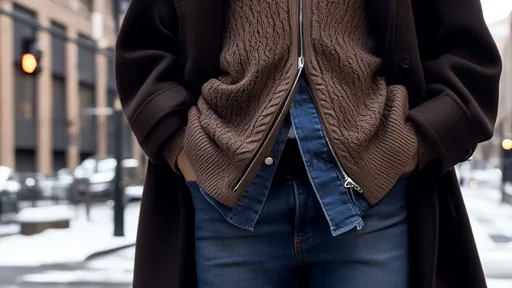
The art of layering has long been a sartorial strategy for those who value both style and practicality. In the realm of fashion, mastering the five-layer challenge—from base garments to outerwear—requires a delicate balance between aesthetics and functionality. This nuanced approach to dressing isn't merely about piling on clothes; it's about creating harmony among textures, weights, and silhouettes while maintaining comfort throughout the day.
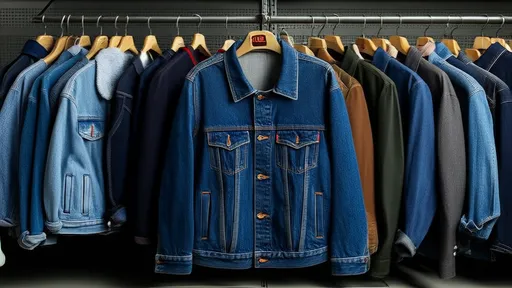
The world of denim has entered a new era of preservation and innovation with the launch of the Denim Jacket Gene Bank, an ambitious project dedicated to digitally archiving a century's worth of iconic jacket silhouettes. This groundbreaking initiative combines fashion history with cutting-edge technology, creating a living library that documents the evolution of denim outerwear from its workwear origins to its current status as a cultural symbol.
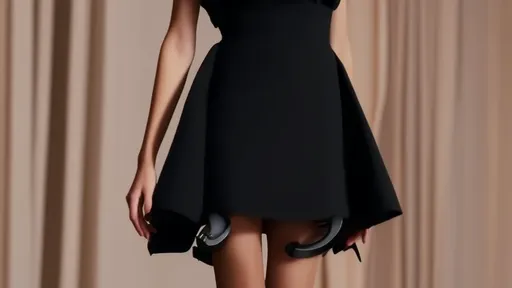
Fashion has always been about self-expression, but rarely has it ventured into the realm of true adaptability—until now. The latest innovation in women's apparel, the magnetic hemline adjustment for little black dresses (LBDs), is redefining versatility in wardrobe staples. This groundbreaking design allows wearers to modify their dress length effortlessly, transitioning from a daring mini to an elegant midi or even a sophisticated maxi with a simple magnetic clasp system. It’s not just a dress; it’s a chameleon that adapts to the wearer’s mood, occasion, and personal style.
The fashion industry has long been associated with aesthetics and self-expression, but a groundbreaking innovation is set to redefine the very purpose of outerwear. A revolutionary trench coat, embedded with an advanced drone defense system, is making waves in both tech and fashion circles. This isn’t just a garment—it’s a wearable shield designed for the modern world, where personal security meets cutting-edge technology.
The crisp white shirt has long been the uniform of corporate conformity – a sartorial symbol of professionalism that transcends industries and continents. But in boardrooms from Manhattan to Milan, a quiet revolution is unfolding as avant-garde designers and rebellious professionals reinterpret this workplace staple through the lens of asymmetric cutting.