The narrow alleys of Jaipur’s old quarter hum with the rhythmic tapping of wooden blocks dipped in dye. For generations, artisans have practiced the ancient art of bandhani, the traditional Indian tie-dye technique that transforms plain fabric into intricate patterns. Yet today, the vibrant hues that once flowed from natural indigo, pomegranate peel, and turmeric are increasingly replaced by the synthetic blues and reds of chemical vats. This shift marks more than a change in materials—it threatens to unravel a cultural legacy woven into the very fabric of India’s identity.
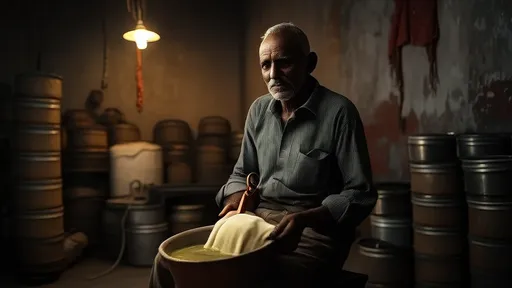
In the village of Bagru, where mud-walled workshops have resisted modernization for centuries, master dyer Rameshwar Lal lifts a skein of silk from a vat of synthetic indigo. "My grandfather would never recognize this color," he says, rubbing the stiff fabric between calloused fingers. "The chemical dye bites the cloth. It’s faster, yes, but where is the soul?" His lament echoes across India’s textile heartlands, from the block printers of Gujarat to the ikat weavers of Odisha. The crisis facing these custodians of heritage isn’t merely economic—it’s a slow suffocation of living history.
The statistics paint a grim picture. According to the Craft Revival Trust, over 60% of traditional dyers in Rajasthan have switched partially or completely to chemical dyes since 2015. The reasons are manifold: synthetic colors require no fermentation period, work consistently across seasons, and cater to fast-fashion timelines. A single kilogram of chemical dye can process 50 meters of fabric in hours—a task that would take natural dyes weeks. But this efficiency comes at a hidden cost. The runoff from synthetic dye units has turned entire stretches of Rajasthan’s rivers technicolor, while dermatologists report rising cases of contact dermatitis from cheap, imported dyes.
Behind the economic pressures lies a deeper cultural erosion. Natural dye recipes—passed down through oral tradition—function as living archives. The precise alchemy of boiling lac insects with alum to produce cardinal red, or fermenting iron scraps with jaggery for black, encodes centuries of experimentation. When artisans abandon these practices, the knowledge disappears like dye in water. "We’re not just losing colors," explains textile anthropologist Dr. Priya Khanna. "We’re severing a tactile connection to our past. Each natural dye carries the fingerprint of its region—the mineral content of local water, the soil composition that grew its plants."
The market bears partial responsibility. Global fast-fashion retailers demand ever-lower prices and standardized colors impossible to achieve with vegetable dyes. A bandhani saree using natural dyes costs 8,000-12,000 rupees ($100-$150), while its chemical-dyed counterpart sells for 3,000-4,000 rupees. For India’s younger generation, raised on Instagram aesthetics and disposable fashion, the premium for heritage holds diminishing appeal. "Foreign buyers appreciate the craftsmanship," says Jaipur exporter Arjun Mehta, "but even they balk at the price difference."
Yet glimmers of hope emerge. Pioneering designers like Anita Dongre are collaborating with rural artisans to create hybrid pieces—combining natural dyes with contemporary silhouettes for urban markets. In Kerala, the government-sponsored "Blue Gold" project trains farmers to cultivate indigo as a cash crop, reviving both agriculture and dye traditions. Most crucially, chemists at institutions like the National Institute of Design are developing ways to accelerate natural dye processes without compromising authenticity. Early experiments with enzymatic fermentation have cut madder root dyeing time from fourteen days to seventy-two hours.
The battle for India’s dyeing traditions mirrors larger global tensions between heritage and modernity. As consumers increasingly value sustainability, the very qualities that made natural dyes "outdated"—biodegradability, non-toxicity, carbon neutrality—are becoming selling points. Perhaps the future lies not in rejecting chemical dyes entirely, but in restoring balance. Like the intricate resist patterns of bandhani itself, preservation may require both holding fast to tradition and adapting to the contours of a changing world.
On the banks of the now-stained Bandi River, Rameshwar Lal’s teenage granddaughter Priya demonstrates a compromise. She uses chemical dyes for bulk orders but reserves natural indigo for special pieces. "The old ways take patience," she admits, unwrapping a nine-month-fermented indigo vat, its surface gleaming like quicksilver. As she dips a length of cotton, the fabric emerges not the expected blue, but a radiant green—transforming to its final hue only upon oxidation. "See? Some things still need time." In that magical transition lies the essence of a craft that refuses to fade.
In the dimly lit back room of an unassuming boutique in downtown London, a forensic expert kneels beside a bloodstained cashmere scarf, inhaling deeply. This isn't some macabre ritual—it's the cutting edge of crime scene investigation. The newly launched Scent Forensics Unit at Harrod's flagship store has pioneered an olfactory investigation technique that's rewriting the rules of retail security.
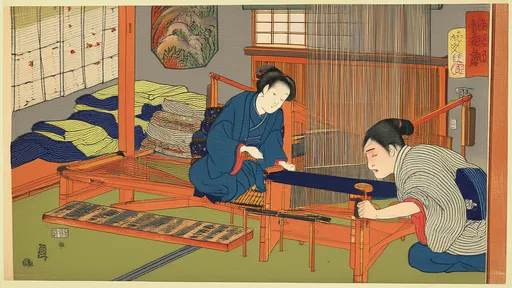
The rhythmic clatter of wooden looms once echoed through Kyoto's Nishijin district like a heartbeat, a sound woven into the city's cultural DNA for over twelve centuries. But these days, the heartbeat grows faint. Nishijin's legendary brocade – the dazzling Nishijin-ori textiles that adorned samurai and graced imperial courts – faces an existential crisis far more complex than any economic downturn. The real threat lies in a generational gamble unfolding in quiet weaving workshops: an aging master weaver glances at his empty tea cup, wondering if his intricate craft will die with him.
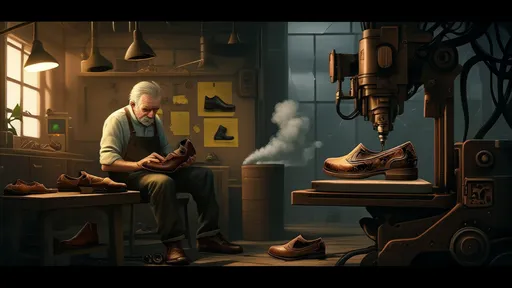
The cobbled streets of Italy’s historic shoemaking districts have long echoed with the rhythmic tapping of hammers and the quiet hum of artisans at work. For generations, the country’s shoemakers have prided themselves on crafting footwear by hand, each stitch and cut a testament to centuries of tradition. Yet today, that legacy faces an existential threat—not from globalization or fast fashion, but from an unexpected disruptor: 3D printing.
The narrow alleys of Jaipur’s old quarter hum with the rhythmic tapping of wooden blocks dipped in dye. For generations, artisans have practiced the ancient art of bandhani, the traditional Indian tie-dye technique that transforms plain fabric into intricate patterns. Yet today, the vibrant hues that once flowed from natural indigo, pomegranate peel, and turmeric are increasingly replaced by the synthetic blues and reds of chemical vats. This shift marks more than a change in materials—it threatens to unravel a cultural legacy woven into the very fabric of India’s identity.
The Scottish tartan, with its vibrant crisscrossing lines and rich hues, has long been a symbol of cultural identity and heritage. Yet beneath its colorful surface lies a simmering legal and ethical debate: when does the adoption of tartan patterns by global fashion houses and commercial entities cross the line from appreciation to appropriation? The so-called "Tartan Wars" have ignited discussions far beyond the Highlands, challenging legal frameworks and cultural sensitivities alike.
The fashion industry has long been synonymous with luxury, creativity, and opulence. Yet, beneath the shimmering surfaces of haute couture runways and glossy magazine spreads lies a darker narrative—one that involves the alarming decline of avian species due to the demand for exotic feathers. As conservationists sound the alarm on the irreversible damage caused by feather harvesting, the tension between high fashion and endangered species protection has reached a critical point.
In the intricate dance of power and perception, few accessories speak as loudly as the necklace. From the boardrooms of Manhattan to the royal courts of Europe, the length of a necklace has long been observed as a subtle yet potent indicator of authority. This unspoken sartorial code – what style insiders now call The Game of Necklaces: The Length Equals Power Rule – reveals how centimeters can translate into commanding presence.
The fashion industry has always been a realm of illusion, where silhouettes are sculpted not just by fabric but by carefully engineered structures beneath. Among these hidden architectures, the volumetric fraud of inflatable skirt supports—cloaked in what designers coyly term "invisible technology"—has emerged as one of the most intriguing (and quietly controversial) innovations in contemporary couture. What began as a whimsical experiment in avant-garde ateliers has now infiltrated mainstream retail, leaving consumers and critics alike to grapple with the literal and metaphorical air at the heart of modern dressing.
The concept of a capsule wardrobe has taken the fashion world by storm, offering a minimalist approach to style without sacrificing versatility. At its core, the idea revolves around owning fewer pieces that can be mixed and matched to create multiple outfits. But what happens when you push this philosophy to its absolute limit? Imagine having just two key items and making them work for seven days straight. It sounds impossible, yet with the right pieces and a dash of creativity, it’s entirely achievable.
The intersection of athletic wear and formal attire has long been a sartorial tightrope walk, but the recent trend of pairing basketball shorts with tailored blazers has emerged as a surprisingly viable hybrid. This unlikely marriage of comfort and sophistication challenges traditional dress codes while offering a fresh perspective on contemporary menswear. As workplaces relax their sartorial standards and streetwear continues to influence high fashion, this bold combination has gained traction among style-forward professionals and creatives alike.
The art of layering has long been a sartorial strategy for those who value both style and practicality. In the realm of fashion, mastering the five-layer challenge—from base garments to outerwear—requires a delicate balance between aesthetics and functionality. This nuanced approach to dressing isn't merely about piling on clothes; it's about creating harmony among textures, weights, and silhouettes while maintaining comfort throughout the day.
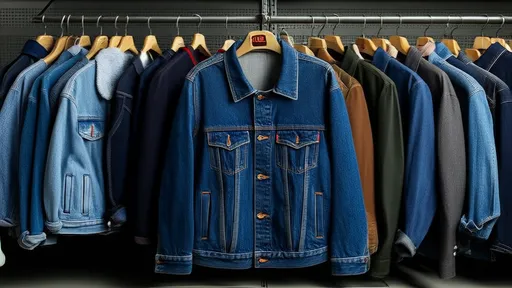
The world of denim has entered a new era of preservation and innovation with the launch of the Denim Jacket Gene Bank, an ambitious project dedicated to digitally archiving a century's worth of iconic jacket silhouettes. This groundbreaking initiative combines fashion history with cutting-edge technology, creating a living library that documents the evolution of denim outerwear from its workwear origins to its current status as a cultural symbol.
Fashion has always been about self-expression, but rarely has it ventured into the realm of true adaptability—until now. The latest innovation in women's apparel, the magnetic hemline adjustment for little black dresses (LBDs), is redefining versatility in wardrobe staples. This groundbreaking design allows wearers to modify their dress length effortlessly, transitioning from a daring mini to an elegant midi or even a sophisticated maxi with a simple magnetic clasp system. It’s not just a dress; it’s a chameleon that adapts to the wearer’s mood, occasion, and personal style.
The fashion industry has long been associated with aesthetics and self-expression, but a groundbreaking innovation is set to redefine the very purpose of outerwear. A revolutionary trench coat, embedded with an advanced drone defense system, is making waves in both tech and fashion circles. This isn’t just a garment—it’s a wearable shield designed for the modern world, where personal security meets cutting-edge technology.
The crisp white shirt has long been the uniform of corporate conformity – a sartorial symbol of professionalism that transcends industries and continents. But in boardrooms from Manhattan to Milan, a quiet revolution is unfolding as avant-garde designers and rebellious professionals reinterpret this workplace staple through the lens of asymmetric cutting.