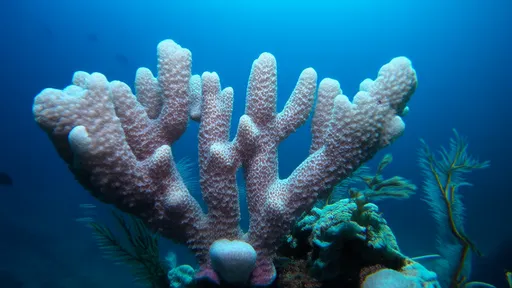
Beneath the ocean's shimmering surface lies one of Earth's most magnificent and paradoxical creations—coral reefs. These vibrant underwater metropolises, often dubbed the rainforests of the sea, are not merely collections of colorful organisms but are, in fact, monumental feats of natural architecture. At the heart of their existence is a silent, relentless, and ancient promise: the perpetual accumulation of calcium carbonate. This process, both delicate and mighty, constructs the very foundations upon which entire ecosystems thrive, supporting an astonishing quarter of all marine life. The story of coral growth is a narrative written in stone, a testament to persistence that spans millennia, yet it is a narrative now under threat, making its understanding more critical than ever.
The architects of these submarine empires are the corals themselves, specifically the tiny, soft-bodied organisms known as polyps. These creatures, often no larger than a pinhead, are the master builders. They live in vast colonies, each individual a clone of the next, working in a harmonious, collective effort. Their tool is not a trowel or hammer, but a remarkable biological mechanism. They extract calcium and carbonate ions from the surrounding seawater, a process that requires immense energy. This energy is supplied not solely by their own means but through a fascinating and symbiotic partnership with microscopic algae called zooxanthellae, which reside within the polyp's tissues. These algae are the solar power plants of the operation, converting sunlight into chemical energy through photosynthesis, a substantial portion of which is transferred directly to the polyp host. This energy fuels the polyp's metabolic engine, allowing it to power the crucial calcification process.
The act of construction is a precise biochemical ballet. The polyp secretes calcium carbonate (CaCO3) to form a protective cup-like skeleton around its base, known as a corallite. This is not a sporadic activity but a constant, lifelong endeavor. As the polyp grows upward, it continues to lay down new layers of limestone beneath it, effectively building its own home floor by floor. When the polyp dies, its hardy limestone skeleton remains. Generation after generation, new polyps build upon the skeletal legacy of their predecessors. This incremental, cumulative process is the engine of reef growth. Over centuries, the sheer volume of these tiny contributions results in the formation of massive, complex structures—barrier reefs, atolls, and fringing reefs that can be seen from space. The Great Barrier Reef, for instance, is not a single entity but a vast mosaic of billions upon billions of these ancient, layered skeletons, a literal living rock built over roughly 20,000 years.
The environment plays a dictatorial role in this construction project. Coral growth is exquisitely sensitive to its surroundings, thriving only under very specific conditions. Water temperature is paramount; most reef-building corals require warm waters, typically between 23° and 29° Celsius. This is why they are predominantly found in shallow, sun-drenched tropical and subtropical waters. The clarity and depth of the water are equally crucial, as they determine the amount of life-giving sunlight that can penetrate to power the zooxanthellae's photosynthesis. Furthermore, the salinity and the precise chemical composition of the water must remain stable. The availability of carbonate ions (CO3²⁻) is the fundamental raw material for calcification. The entire process is a delicate balance, a Goldilocks scenario where everything must be just right for the perpetual promise of calcification to be upheld.
This brings us to the central, looming challenge: ocean acidification. The ocean acts as a massive carbon sink, absorbing a significant portion of the excess carbon dioxide (CO2) released into the atmosphere by human activities. While this mitigates some atmospheric warming, it triggers a profound chemical change in the seawater. When CO2 dissolves, it reacts with water to form carbonic acid, which subsequently dissociates, releasing hydrogen ions. These hydrogen ions actively seek out and bond with the available carbonate ions in the water, forming bicarbonate. This simple reaction steals the very building blocks corals depend on. In a more acidic ocean, the concentration of carbonate ions decreases dramatically. For corals, this is akin to a construction team arriving at a site to find their shipment of cement has been drastically reduced. They must expend vastly more energy to gather the scarce materials, slowing their growth rates, producing weaker, more porous skeletons, and in severe cases, halting calcification altogether. The eternal promise of calcium carbonate accumulation is broken.
The repercussions of slowed calcification extend far beyond the coral itself. Weaker skeletons make reefs more fragile and susceptible to damage from storms and wave action. The intricate, nook-filled architecture of a healthy reef provides critical habitat and shelter for countless fish, invertebrates, and other marine species. As growth slows and erosion increases, this complex three-dimensional structure begins to flatten and simplify—a process known as reef homogenization. This loss of habitat complexity leads to precipitous declines in the biodiversity the reef can support. The economic and cultural consequences for the hundreds of millions of people who rely on reefs for food, coastal protection from storm surges, and tourism income are severe and escalating. The collapse of a reef is the collapse of an entire socio-ecological system.
Despite the grim outlook, the narrative is not yet one of certain doom. The natural world possesses a reservoir of resilience, and science is actively exploring ways to bolster it. Research is focused on identifying and cultivating super corals—strains that demonstrate a higher tolerance for warmth and acidity. These resilient individuals could hold the genetic keys to survival, and efforts are underway to selectively breed them and outplant them onto degraded reefs, effectively accelerating natural adaptation. Other innovative approaches include assisted evolution and the local management of water quality to reduce additional stressors like pollution and sedimentation. On a larger scale, the only permanent solution is the drastic reduction of global carbon emissions. Cutting CO2 levels is the singular most effective action to curb ocean acidification and warming, giving corals a fighting chance to continue their ancient work.
The story of coral growth is a profound dialogue between biology and chemistry, a promise of construction written in limestone. It is a testament to the power of collective, incremental effort over geological time. These reefs are more than just biological wonders; they are archives of Earth's history, records of past climates, and pillars of marine life. The choice now presented to humanity is whether we will be the generation that allows this eternal promise to be broken by our actions, or whether we will become active participants in safeguarding it. The continued accumulation of calcium carbonate, the very heartbeat of the reef, depends on our resolve to change its prevailing conditions. The future of these underwater cathedrals, and all that depends on them, hangs in the balance, awaiting our next move.
In the quiet corners of libraries, the bustling floors of tech startups, and the focused atmosphere of university common rooms, a small, colorful object has become an unexpected symbol of cognitive harmony. The Rubik's Cube, a puzzle invented in 1974 by Hungarian sculptor and professor of architecture Ernő Rubik, has long transcended its status as a mere toy. It has evolved into a profound tool for understanding the intricate dance between spatial reasoning, pattern recognition, and the synchronized thinking required to conquer a complex, three-dimensional challenge.
On a sweltering summer afternoon, few things bring as much instant delight as a scoop of perfectly chilled ice cream. Yet, this fleeting joy is often cut short by a familiar, dripping disappointment. The phenomenon of ice cream melting, a source of minor culinary tragedy for centuries, is not merely a matter of temperature but a fascinating dance of physics and chemistry centered on a principle known as freezing point depression. This scientific concept transforms a simple mixture of cream, sugar, and flavorings into a complex, structured delight that is inherently unstable against the warmth of a summer day.
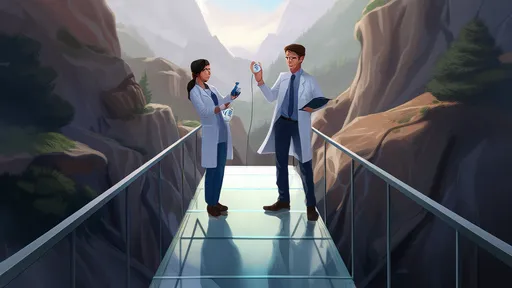
It was a classic scene in countless films and novels: two characters find themselves in a precarious situation, perhaps hanging from a crumbling ledge or fleeing from some imminent danger. Their hearts pound, their palms sweat, and in the heightened state of shared terror, a powerful, often unexpected, romantic connection sparks between them. For decades, this was dismissed as a convenient plot device, a fanciful notion with little basis in reality. However, the intriguing psychological phenomenon now known as the "Suspension Bridge Effect" suggests there might be a profound scientific truth buried within this cinematic trope, revealing a fascinating and complex link between our physiological arousal and the experience of romantic attraction.
In an age where smartphones have become ubiquitous extensions of our daily lives, their capabilities extend far beyond communication and entertainment. One of the most overlooked yet potentially life-saving features lies in the humble LED flash—a component typically associated with photography that has quietly evolved into an emergency signaling tool. The concept of using light as a distress signal is ancient, but its integration into modern handheld devices represents a fascinating convergence of tradition and technology.
Beneath the ocean's shimmering surface lies one of Earth's most magnificent and paradoxical creations—coral reefs. These vibrant underwater metropolises, often dubbed the rainforests of the sea, are not merely collections of colorful organisms but are, in fact, monumental feats of natural architecture. At the heart of their existence is a silent, relentless, and ancient promise: the perpetual accumulation of calcium carbonate. This process, both delicate and mighty, constructs the very foundations upon which entire ecosystems thrive, supporting an astonishing quarter of all marine life. The story of coral growth is a narrative written in stone, a testament to persistence that spans millennia, yet it is a narrative now under threat, making its understanding more critical than ever.
In the heart of every playground, there exists a simple yet profound teacher of physics—the seesaw. This timeless apparatus, often taken for granted as mere child’s play, is a living demonstration of one of the most fundamental principles of mechanics: the lever. The joy of soaring into the air, suspended by the weight of a friend, is not just a moment of laughter but an experiential lesson in balance, force, and equilibrium.
In the world of philately, few elements are as functionally elegant and historically significant as the humble perforation. These tiny rows of holes, often overlooked by the casual observer, represent a revolutionary advancement in postal technology and a fascinating intersection of design, engineering, and commerce. The story of the postage stamp perforation is not merely a technical footnote; it is a narrative of how a simple innovation solved a practical problem and, in doing so, added a new layer of complexity and beauty to stamp collecting.
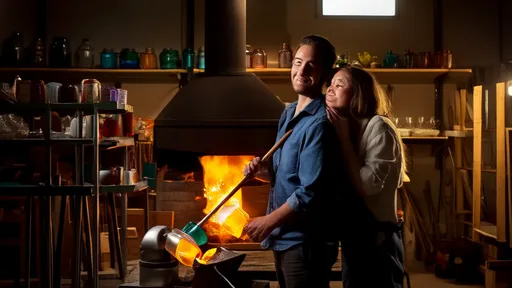
In the heart of a sweltering studio, where temperatures soar and the air shimmers with heat, an ancient dance unfolds between artisan and element. This is the world of glassblowing, a craft where fire and breath collaborate to shape molten silica into objects of breathtaking beauty and fragility. The process, often described as a form of alchemy, is more than mere technique; it is a profound metaphor for human connection, a narrative of love molded under intense pressure and radiant heat. The title Glassblowing: A Vessel of Love Forged in High Temperatures captures this essence perfectly, framing the art not just as a physical transformation but as an emotional and symbolic journey.
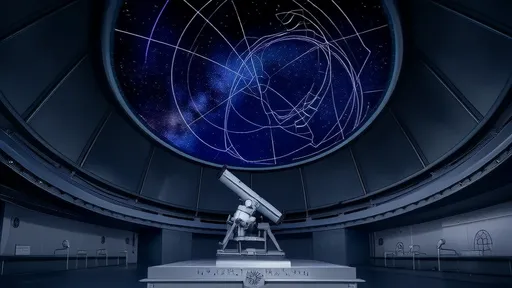
The celestial dome has long served as humanity's window to the cosmos, a architectural marvel that bridges terrestrial existence with celestial wonder. Modern planetariums have evolved from simple observation points to sophisticated theaters of astronomical education, where mathematical modeling transforms abstract cosmic principles into tangible visual experiences. The intricate dance of projecting accurate night skies onto domed surfaces represents one of the most fascinating applications of mathematical precision in public education, merging artistic vision with scientific rigor in ways that continue to captivate audiences worldwide.
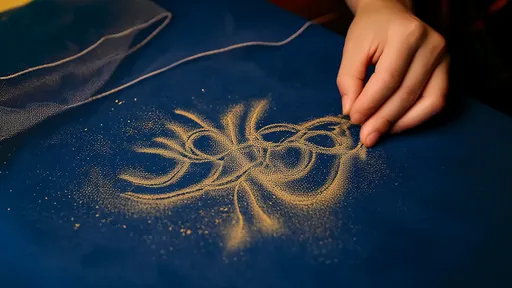
In the dimly lit theater, a lone artist stands before a glowing light table, hands hovering over a thin layer of fine sand. The audience holds its breath as fingers begin to dance—sweeping, flicking, tracing—transforming inert grains into living stories. This is sand animation: an ephemeral art form where narratives bloom and vanish in the same breath, where permanence surrenders to poetry.
In the quiet hum of modern kitchens, a revolution has been simmering—one powered not by flames but by microwaves. The concept of microwave cooking often conjures images of hastily reheated leftovers or soggy frozen meals, yet beneath this misunderstood reputation lies a sophisticated science of molecular vibration heating that is reshaping how we approach gourmet dining for two. This isn’t about convenience alone; it’s about unlocking flavors, textures, and culinary creativity through the precise manipulation of energy.
In the heart of the city stands an ancient clock tower, its face weathered by centuries yet still keeping impeccable time. The mechanism within is a masterpiece of engineering, a symphony of interlocking gears that dance in perfect harmony. For generations, this tower has not only measured the hours but also symbolized the relentless pursuit of precision in a world governed by chaos.
In the quiet corners of autumn, when the world sheds its summer skin, a delicate artistry emerges from the fallen leaves. The concept of Leaf Collage: A Natural Love Letter from Plant Veins captures more than just an aesthetic pursuit—it is a meditation on the ephemeral beauty of nature and the stories etched into every fragile surface. Each leaf, with its intricate network of veins, carries the whispers of seasons passed, the resilience of growth, and the gentle surrender to decay. This practice transforms what many consider debris into a canvas, where the language of nature is spelled out in hues of amber, crimson, and gold.
In the quiet space between two bodies moving as one, there is a conversation that transcends words. Partner yoga, an ancient practice reimagined for modern connection, is far more than a series of synchronized stretches. It is a dynamic laboratory of human interaction, a living equation where the variables of weight, balance, and momentum are solved not with numbers, but with trust. The theme of Partner Yoga: The Trust Equation of Body Mechanics delves into this intricate dance, exploring how the principles of physics and the nuances of psychology intertwine to create a practice that builds strength, flexibility, and profound relational bonds.
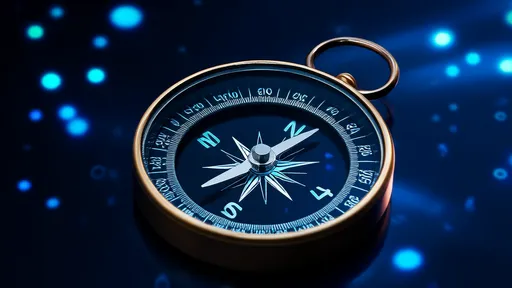
In the quiet predawn hours, when the world still slumbers beneath a blanket of stars, navigators of old would consult their most trusted companion: the magnetic compass. Its needle, dancing with an almost sentient grace, would eventually settle, pointing unerringly toward the magnetic north. For centuries, this simple yet profound instrument has guided explorers across trackless oceans, through dense, uncharted forests, and over vast, featureless deserts. It is a symbol of human ingenuity, a tool that harnesses the very heartbeat of the planet to show us the way. The relationship between the traveler and the compass is one of pure faith—a belief that the needle's whisper is truth.