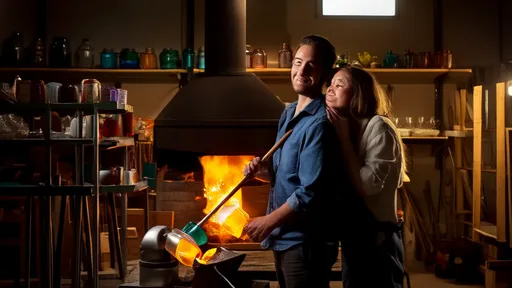
In the heart of a sweltering studio, where temperatures soar and the air shimmers with heat, an ancient dance unfolds between artisan and element. This is the world of glassblowing, a craft where fire and breath collaborate to shape molten silica into objects of breathtaking beauty and fragility. The process, often described as a form of alchemy, is more than mere technique; it is a profound metaphor for human connection, a narrative of love molded under intense pressure and radiant heat. The title Glassblowing: A Vessel of Love Forged in High Temperatures captures this essence perfectly, framing the art not just as a physical transformation but as an emotional and symbolic journey.
The origins of glassblowing trace back over two millennia, to the Phoenician coast around the 1st century BCE. This revolutionary technique allowed artisans to create vessels with unprecedented speed and elegance compared to earlier methods like core-forming or casting. The introduction of the blowpipe was nothing short of a miracle—a tool that harnessed human breath to inflate a gather of molten glass into a bubble, which could then be shaped, twisted, and coaxed into forms limited only by imagination. Throughout history, from the Roman Empire to the Venetian masters of Murano, glassblowing has been revered, its secrets guarded fiercely. Yet, beyond its historical and artistic significance, it has always carried a deeper, almost poetic resonance: the act of breathing life into form, of transforming raw, fiery material into something delicate and enduring.
At its core, glassblowing is an intimate partnership between the artisan and the material. The process begins at the glory hole, a furnace burning at temperatures exceeding 2000°F, where the glass is gathered onto the end of a steel blowpipe. This initial gather is a glowing, honey-like orb, dripping with potential. The glassblower must work quickly, rhythmically rotating the pipe to maintain symmetry and prevent gravity from distorting the form. Here, the first whispers of love emerge—the devotion to the material, the respect for its properties, the patience required to guide rather than force. The artist’s breath, sent through the pipe, becomes the first infusion of spirit into the glass, inflating it into a fragile bubble that pulses with heat and light.
As the shaping continues, the glass is repeatedly reheated to keep it malleable. Each return to the furnace is a reunion, a necessary rekindling of energy to continue the transformation. The artisan uses simple tools—jacks, shears, blocks, and paddles—to sculpt the surface, creating curves, necks, and bases. Every touch is deliberate; every movement is a conversation between hand and medium. This stage mirrors the complexities of love: the need for constant nurturing, the balance of pressure and gentleness, and the acceptance that some imperfections—a slight asymmetry, a trapped bubble—add character rather than detract from the whole. The vessel, like a relationship, is built through cycles of heating and cooling, effort and rest, intensity and calm.
Color introduces another layer of meaning. Through the addition of metallic oxides or colored frits, the clear glass transforms, taking on hues that range from deep cobalt blues to vibrant ruby reds. These colors are not merely superficial; they are fused into the very fabric of the material, much like memories and experiences are woven into the tapestry of love. The choice of color is often deeply personal, reflecting the artist’s emotions or the intended narrative of the piece. A vessel might blush with the pink of dawn or smolder with the gold of a sunset, each shade telling a story of passion, tranquility, or longing. The integration of color requires skill and intuition, as the artist must predict how pigments will react to heat and movement, blending and flowing in unexpected ways.
The final stages of glassblowing are perhaps the most perilous. Annealing, a controlled cooling process in a lehr oven, relieves the internal stresses within the glass, ensuring it does not crack from thermal shock. This slow descent from extreme heat to room temperature is critical; too rapid, and the vessel shatters. Here, the metaphor deepens: love, too, requires careful tempering. The initial fervor must give way to stability, the fiery passions cooling into a durable, lasting bond. The annealing process is silent and unseen, yet it is what ultimately determines the strength and longevity of the piece. Without it, even the most beautifully shaped vessel would be fragile, doomed to fracture at the slightest disturbance.
In contemporary practice, glassblowing has evolved into both an art form and a therapeutic practice. Many artists describe the process as meditative, a flow state where time dissolves and only the dialogue with the glass remains. This mindfulness parallels the focus and presence required in meaningful relationships. Moreover, the shared nature of glassblowing—often performed by teams where each member plays a crucial role—echoes the collaboration essential to love. The gaffer, the assistant, the servitor: all must move in harmony, anticipating needs and supporting one another, much like partners in life. The studio becomes a microcosm of community, built on trust, communication, and shared purpose.
The vessels created through this arduous process are more than objects; they are containers of stories. A handblown glass might hold wine, light, or simply space, but it also holds the breath of its maker, the memory of the fire, and the intention of its design. In this way, each piece becomes a vessel of love, symbolizing the beauty that emerges from vulnerability and transformation. It reminds us that love, like glass, is both strong and fragile, shaped by heat and cooled by patience, capable of reflecting light in a thousand different ways. The art of glassblowing, therefore, is not just about creating functional or decorative items; it is about capturing a moment of alchemical magic, where elements and emotions fuse into something timeless and true.
Ultimately, Glassblowing: A Vessel of Love Forged in High Temperatures is a testament to human creativity and resilience. It celebrates the idea that the most beautiful things in life often require passing through fire, that breath can give form to the formless, and that love—in all its forms—is the ultimate craftsman, shaping us into vessels capable of holding both light and shadow. As we admire a handblown glass piece, we are not just seeing silica and pigment; we are witnessing a love story, written in heat and sealed in transparency, waiting to be held up to the light.
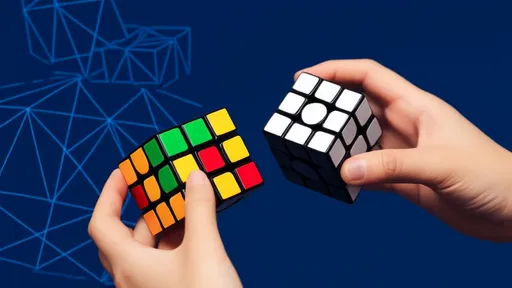
In the quiet corners of libraries, the bustling floors of tech startups, and the focused atmosphere of university common rooms, a small, colorful object has become an unexpected symbol of cognitive harmony. The Rubik's Cube, a puzzle invented in 1974 by Hungarian sculptor and professor of architecture Ernő Rubik, has long transcended its status as a mere toy. It has evolved into a profound tool for understanding the intricate dance between spatial reasoning, pattern recognition, and the synchronized thinking required to conquer a complex, three-dimensional challenge.
On a sweltering summer afternoon, few things bring as much instant delight as a scoop of perfectly chilled ice cream. Yet, this fleeting joy is often cut short by a familiar, dripping disappointment. The phenomenon of ice cream melting, a source of minor culinary tragedy for centuries, is not merely a matter of temperature but a fascinating dance of physics and chemistry centered on a principle known as freezing point depression. This scientific concept transforms a simple mixture of cream, sugar, and flavorings into a complex, structured delight that is inherently unstable against the warmth of a summer day.
It was a classic scene in countless films and novels: two characters find themselves in a precarious situation, perhaps hanging from a crumbling ledge or fleeing from some imminent danger. Their hearts pound, their palms sweat, and in the heightened state of shared terror, a powerful, often unexpected, romantic connection sparks between them. For decades, this was dismissed as a convenient plot device, a fanciful notion with little basis in reality. However, the intriguing psychological phenomenon now known as the "Suspension Bridge Effect" suggests there might be a profound scientific truth buried within this cinematic trope, revealing a fascinating and complex link between our physiological arousal and the experience of romantic attraction.
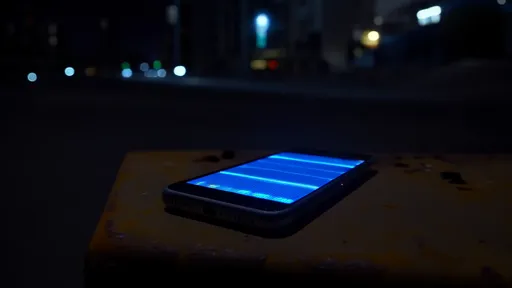
In an age where smartphones have become ubiquitous extensions of our daily lives, their capabilities extend far beyond communication and entertainment. One of the most overlooked yet potentially life-saving features lies in the humble LED flash—a component typically associated with photography that has quietly evolved into an emergency signaling tool. The concept of using light as a distress signal is ancient, but its integration into modern handheld devices represents a fascinating convergence of tradition and technology.
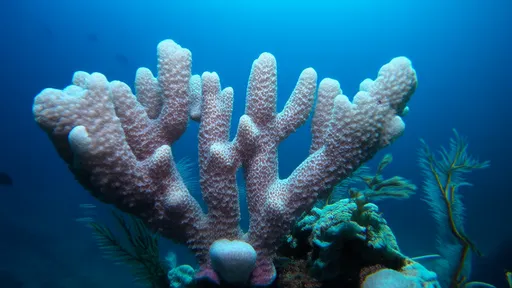
Beneath the ocean's shimmering surface lies one of Earth's most magnificent and paradoxical creations—coral reefs. These vibrant underwater metropolises, often dubbed the rainforests of the sea, are not merely collections of colorful organisms but are, in fact, monumental feats of natural architecture. At the heart of their existence is a silent, relentless, and ancient promise: the perpetual accumulation of calcium carbonate. This process, both delicate and mighty, constructs the very foundations upon which entire ecosystems thrive, supporting an astonishing quarter of all marine life. The story of coral growth is a narrative written in stone, a testament to persistence that spans millennia, yet it is a narrative now under threat, making its understanding more critical than ever.
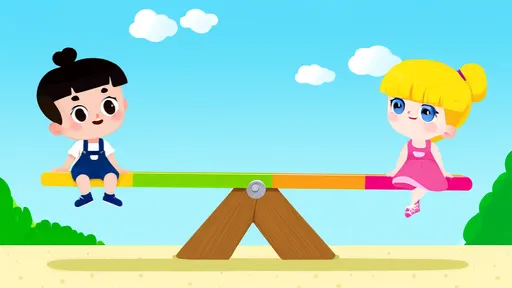
In the heart of every playground, there exists a simple yet profound teacher of physics—the seesaw. This timeless apparatus, often taken for granted as mere child’s play, is a living demonstration of one of the most fundamental principles of mechanics: the lever. The joy of soaring into the air, suspended by the weight of a friend, is not just a moment of laughter but an experiential lesson in balance, force, and equilibrium.
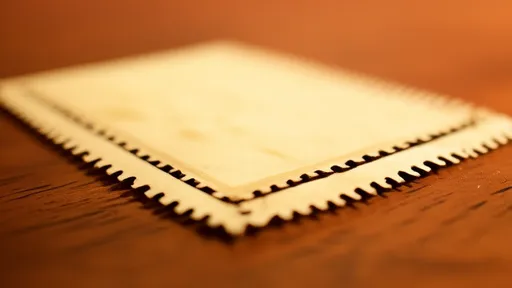
In the world of philately, few elements are as functionally elegant and historically significant as the humble perforation. These tiny rows of holes, often overlooked by the casual observer, represent a revolutionary advancement in postal technology and a fascinating intersection of design, engineering, and commerce. The story of the postage stamp perforation is not merely a technical footnote; it is a narrative of how a simple innovation solved a practical problem and, in doing so, added a new layer of complexity and beauty to stamp collecting.
In the heart of a sweltering studio, where temperatures soar and the air shimmers with heat, an ancient dance unfolds between artisan and element. This is the world of glassblowing, a craft where fire and breath collaborate to shape molten silica into objects of breathtaking beauty and fragility. The process, often described as a form of alchemy, is more than mere technique; it is a profound metaphor for human connection, a narrative of love molded under intense pressure and radiant heat. The title Glassblowing: A Vessel of Love Forged in High Temperatures captures this essence perfectly, framing the art not just as a physical transformation but as an emotional and symbolic journey.
The celestial dome has long served as humanity's window to the cosmos, a architectural marvel that bridges terrestrial existence with celestial wonder. Modern planetariums have evolved from simple observation points to sophisticated theaters of astronomical education, where mathematical modeling transforms abstract cosmic principles into tangible visual experiences. The intricate dance of projecting accurate night skies onto domed surfaces represents one of the most fascinating applications of mathematical precision in public education, merging artistic vision with scientific rigor in ways that continue to captivate audiences worldwide.
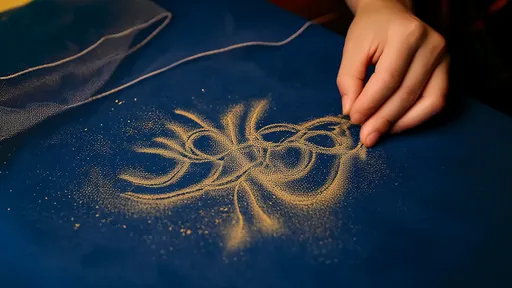
In the dimly lit theater, a lone artist stands before a glowing light table, hands hovering over a thin layer of fine sand. The audience holds its breath as fingers begin to dance—sweeping, flicking, tracing—transforming inert grains into living stories. This is sand animation: an ephemeral art form where narratives bloom and vanish in the same breath, where permanence surrenders to poetry.
In the quiet hum of modern kitchens, a revolution has been simmering—one powered not by flames but by microwaves. The concept of microwave cooking often conjures images of hastily reheated leftovers or soggy frozen meals, yet beneath this misunderstood reputation lies a sophisticated science of molecular vibration heating that is reshaping how we approach gourmet dining for two. This isn’t about convenience alone; it’s about unlocking flavors, textures, and culinary creativity through the precise manipulation of energy.
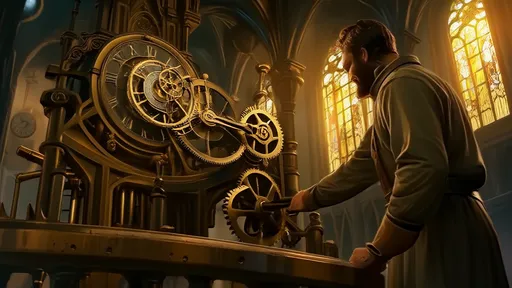
In the heart of the city stands an ancient clock tower, its face weathered by centuries yet still keeping impeccable time. The mechanism within is a masterpiece of engineering, a symphony of interlocking gears that dance in perfect harmony. For generations, this tower has not only measured the hours but also symbolized the relentless pursuit of precision in a world governed by chaos.
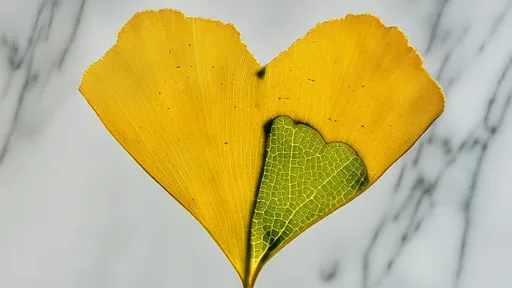
In the quiet corners of autumn, when the world sheds its summer skin, a delicate artistry emerges from the fallen leaves. The concept of Leaf Collage: A Natural Love Letter from Plant Veins captures more than just an aesthetic pursuit—it is a meditation on the ephemeral beauty of nature and the stories etched into every fragile surface. Each leaf, with its intricate network of veins, carries the whispers of seasons passed, the resilience of growth, and the gentle surrender to decay. This practice transforms what many consider debris into a canvas, where the language of nature is spelled out in hues of amber, crimson, and gold.
In the quiet space between two bodies moving as one, there is a conversation that transcends words. Partner yoga, an ancient practice reimagined for modern connection, is far more than a series of synchronized stretches. It is a dynamic laboratory of human interaction, a living equation where the variables of weight, balance, and momentum are solved not with numbers, but with trust. The theme of Partner Yoga: The Trust Equation of Body Mechanics delves into this intricate dance, exploring how the principles of physics and the nuances of psychology intertwine to create a practice that builds strength, flexibility, and profound relational bonds.
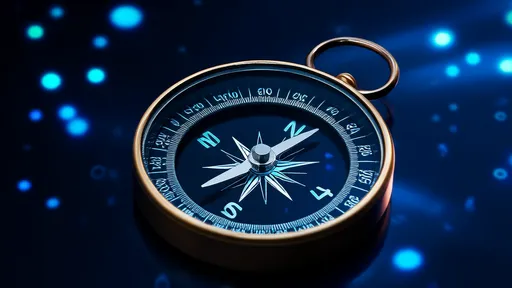
In the quiet predawn hours, when the world still slumbers beneath a blanket of stars, navigators of old would consult their most trusted companion: the magnetic compass. Its needle, dancing with an almost sentient grace, would eventually settle, pointing unerringly toward the magnetic north. For centuries, this simple yet profound instrument has guided explorers across trackless oceans, through dense, uncharted forests, and over vast, featureless deserts. It is a symbol of human ingenuity, a tool that harnesses the very heartbeat of the planet to show us the way. The relationship between the traveler and the compass is one of pure faith—a belief that the needle's whisper is truth.