It was a classic scene in countless films and novels: two characters find themselves in a precarious situation, perhaps hanging from a crumbling ledge or fleeing from some imminent danger. Their hearts pound, their palms sweat, and in the heightened state of shared terror, a powerful, often unexpected, romantic connection sparks between them. For decades, this was dismissed as a convenient plot device, a fanciful notion with little basis in reality. However, the intriguing psychological phenomenon now known as the "Suspension Bridge Effect" suggests there might be a profound scientific truth buried within this cinematic trope, revealing a fascinating and complex link between our physiological arousal and the experience of romantic attraction.
The foundational study that gave this phenomenon its name was conducted in the 1970s by the psychologists Donald Dutton and Arthur Aron. In their now-famous experiment, an attractive female interviewer approached men who had just crossed one of two bridges in North Vancouver's Capilano Canyon. One was the Capilano Suspension Bridge, a narrow, wobbly, and anxiety-inducing crossing that swayed 230 feet above sharp rocks and shallow rapids. The other was a solid, stable, and safe bridge only a few feet above a small stream. After crossing, the men were asked to complete a questionnaire, which included interpreting a ambiguous picture—a common projective test for sexual arousal. The female interviewer also offered her phone number to each participant, supposedly in case they had further questions.
The results were striking and clear. The men who had just crossed the frightening suspension bridge were significantly more likely to interpret the ambiguous picture in a sexual manner. Furthermore, they were far more likely to later call the interviewer to ask her out on a date, compared to the men who had crossed the safe, stable bridge. Dutton and Aron concluded that the men had misattributed their physiological arousal—the pounding heart, sweaty palms, and nervous excitement caused by the scary bridge—to feelings of attraction toward the interviewer. Their bodies were sending signals of fear and excitement, and in the absence of an obvious external cause (once they were off the bridge), their minds seemingly defaulted to a more socially acceptable explanation: romantic or sexual interest.
At the heart of this misattribution lies a powerful hormone and neurotransmitter: adrenaline, also known as epinephrine. Produced by the adrenal glands sitting atop our kidneys, adrenaline is the cornerstone of the fight-or-flight response, our body's primal reaction to perceived danger, stress, or excitement. When triggered, it floods our system, initiating a cascade of physiological changes designed for survival. The heart rate accelerates dramatically, pumping oxygen-rich blood to muscles. Breathing becomes rapid and shallow to increase oxygen intake. Pupils dilate to improve vision. Blood sugar spikes, providing a immediate energy source. In essence, the body is primed for peak performance in a critical situation.
Crucially, many of these physiological symptoms are virtually identical to the physical sensations we experience during the initial stages of romantic attraction or sexual arousal. The racing heart, the flushed skin, the shortness of breath, the butterflies in the stomach—these are common descriptors for both standing on a ledge and locking eyes with an attractive stranger across a crowded room. The body, in its simplicity, speaks a similar language for both fear and desire. This creates a potential for cognitive confusion. The brain, constantly interpreting the signals from the body, can struggle to correctly label the source of the arousal, especially when the context is ambiguous or multiple potential causes are present.
This is where the concept of the two-factor theory of emotion, developed by Stanley Schachter and Jerome Singer, becomes critically important. The theory posits that emotion is based on two factors: physiological arousal and a cognitive label for that arousal. First, we experience a state of unspecific physiological arousal. Second, we seek out cues from our immediate environment to cognitively interpret and label that arousal. In the suspension bridge experiment, the men experienced intense physiological arousal from the fear of the bridge. When they were immediately approached by an attractive woman, the most readily available and plausible explanation for their still-racing hearts was attraction to her, not the residual fear from the bridge they had just left behind. They cognitively mislabeled their fear-based arousal as romantic attraction.
The implications of the Suspension Bridge Effect extend far beyond a single research study and into the very fabric of how we form relationships and experience love. It suggests that shared exhilarating or mildly stressful experiences can powerfully accelerate the bonding process between people. This explains why activities like watching a horror movie, riding a roller coaster, participating in an adventure sport, or even navigating a challenging project at work can serve as potent catalysts for romantic connection. The shared context provides a mutual source of arousal, which can then be easily—and often mutually—attributed to the presence of the other person.
This phenomenon also offers a sobering caveat for understanding the longevity of relationships. The intense, adrenaline-fueled rush of early attraction, often mistaken for "love at first sight" or an unshakable cosmic connection, is inherently transient. As the novel, exciting, or fear-inducing situation passes and becomes familiar, the constant stream of adrenaline subsides. What remains is the foundational compatibility—or lack thereof—between two people. Many relationships that ignite in a blaze of passionate intensity fizzle out just as quickly once the thrilling context is removed, revealing that the initial "spark" was more about circumstance than deep-seated connection. It serves as a reminder that while adrenaline can start a fire, it cannot fuel it indefinitely; that requires the slower-burning logs of trust, compatibility, and shared values.
Furthermore, the effect is not limited to romantic contexts. It can influence the formation of strong platonic bonds and heighten group cohesion. Soldiers who serve together in high-stress environments often form lifelong bonds of brotherhood. Colleagues who pull consecutive all-nighters to meet a crucial deadline may feel a stronger sense of camaraderie. In these cases, the shared physiological arousal is misattributed not to romantic attraction, but to a heightened sense of kinship, shared purpose, and loyalty towards the group.
Understanding the Suspension Bridge Effect also empowers us to be more mindful consumers of our own emotions. It encourages a moment of reflection: Is my heart racing because of this person, or is it because of the context we are in? This discernment can prevent us from making impulsive romantic decisions based on a temporary high and help us seek out more authentic, stable foundations for long-term relationships. Conversely, it can be a tool for enhancing an existing relationship. Intentionally introducing novel, exciting, or challenging shared activities—like traveling to a new country, taking a dance class, or volunteering for a cause—can reignite feelings of excitement and attraction by once again synchronizing physiological arousal with the presence of a partner.
In conclusion, the Suspension Bridge Effect is far more than a psychological curiosity; it is a fundamental insight into the intricate and often deceptive interplay between our bodies and our minds. It reveals that the line between fear and desire is surprisingly thin, bridged by the powerful and ambiguous effects of adrenaline. Our emotions are not always pure, direct readings of our internal state but are often constructed narratives we build based on physiological cues and environmental context. This understanding demystifies the seemingly magical moment of "love at first sight" and grounds it in tangible biology and psychology. It tells us that sometimes, the flutter in our stomach and the rush in our veins might not be a message from the heart, but an echo from a shaky bridge, a scary movie, or a thrilling chase—a powerful reminder that the story of attraction is written not just by the mind, but by the pulsing, adrenaline-fueled rhythm of the body itself.
In the quiet corners of libraries, the bustling floors of tech startups, and the focused atmosphere of university common rooms, a small, colorful object has become an unexpected symbol of cognitive harmony. The Rubik's Cube, a puzzle invented in 1974 by Hungarian sculptor and professor of architecture Ernő Rubik, has long transcended its status as a mere toy. It has evolved into a profound tool for understanding the intricate dance between spatial reasoning, pattern recognition, and the synchronized thinking required to conquer a complex, three-dimensional challenge.
On a sweltering summer afternoon, few things bring as much instant delight as a scoop of perfectly chilled ice cream. Yet, this fleeting joy is often cut short by a familiar, dripping disappointment. The phenomenon of ice cream melting, a source of minor culinary tragedy for centuries, is not merely a matter of temperature but a fascinating dance of physics and chemistry centered on a principle known as freezing point depression. This scientific concept transforms a simple mixture of cream, sugar, and flavorings into a complex, structured delight that is inherently unstable against the warmth of a summer day.
It was a classic scene in countless films and novels: two characters find themselves in a precarious situation, perhaps hanging from a crumbling ledge or fleeing from some imminent danger. Their hearts pound, their palms sweat, and in the heightened state of shared terror, a powerful, often unexpected, romantic connection sparks between them. For decades, this was dismissed as a convenient plot device, a fanciful notion with little basis in reality. However, the intriguing psychological phenomenon now known as the "Suspension Bridge Effect" suggests there might be a profound scientific truth buried within this cinematic trope, revealing a fascinating and complex link between our physiological arousal and the experience of romantic attraction.
In an age where smartphones have become ubiquitous extensions of our daily lives, their capabilities extend far beyond communication and entertainment. One of the most overlooked yet potentially life-saving features lies in the humble LED flash—a component typically associated with photography that has quietly evolved into an emergency signaling tool. The concept of using light as a distress signal is ancient, but its integration into modern handheld devices represents a fascinating convergence of tradition and technology.
Beneath the ocean's shimmering surface lies one of Earth's most magnificent and paradoxical creations—coral reefs. These vibrant underwater metropolises, often dubbed the rainforests of the sea, are not merely collections of colorful organisms but are, in fact, monumental feats of natural architecture. At the heart of their existence is a silent, relentless, and ancient promise: the perpetual accumulation of calcium carbonate. This process, both delicate and mighty, constructs the very foundations upon which entire ecosystems thrive, supporting an astonishing quarter of all marine life. The story of coral growth is a narrative written in stone, a testament to persistence that spans millennia, yet it is a narrative now under threat, making its understanding more critical than ever.
In the heart of every playground, there exists a simple yet profound teacher of physics—the seesaw. This timeless apparatus, often taken for granted as mere child’s play, is a living demonstration of one of the most fundamental principles of mechanics: the lever. The joy of soaring into the air, suspended by the weight of a friend, is not just a moment of laughter but an experiential lesson in balance, force, and equilibrium.
In the world of philately, few elements are as functionally elegant and historically significant as the humble perforation. These tiny rows of holes, often overlooked by the casual observer, represent a revolutionary advancement in postal technology and a fascinating intersection of design, engineering, and commerce. The story of the postage stamp perforation is not merely a technical footnote; it is a narrative of how a simple innovation solved a practical problem and, in doing so, added a new layer of complexity and beauty to stamp collecting.
In the heart of a sweltering studio, where temperatures soar and the air shimmers with heat, an ancient dance unfolds between artisan and element. This is the world of glassblowing, a craft where fire and breath collaborate to shape molten silica into objects of breathtaking beauty and fragility. The process, often described as a form of alchemy, is more than mere technique; it is a profound metaphor for human connection, a narrative of love molded under intense pressure and radiant heat. The title Glassblowing: A Vessel of Love Forged in High Temperatures captures this essence perfectly, framing the art not just as a physical transformation but as an emotional and symbolic journey.
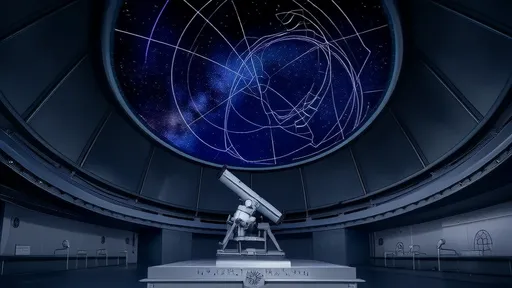
The celestial dome has long served as humanity's window to the cosmos, a architectural marvel that bridges terrestrial existence with celestial wonder. Modern planetariums have evolved from simple observation points to sophisticated theaters of astronomical education, where mathematical modeling transforms abstract cosmic principles into tangible visual experiences. The intricate dance of projecting accurate night skies onto domed surfaces represents one of the most fascinating applications of mathematical precision in public education, merging artistic vision with scientific rigor in ways that continue to captivate audiences worldwide.
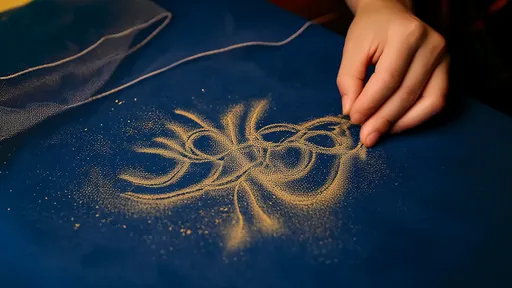
In the dimly lit theater, a lone artist stands before a glowing light table, hands hovering over a thin layer of fine sand. The audience holds its breath as fingers begin to dance—sweeping, flicking, tracing—transforming inert grains into living stories. This is sand animation: an ephemeral art form where narratives bloom and vanish in the same breath, where permanence surrenders to poetry.
In the quiet hum of modern kitchens, a revolution has been simmering—one powered not by flames but by microwaves. The concept of microwave cooking often conjures images of hastily reheated leftovers or soggy frozen meals, yet beneath this misunderstood reputation lies a sophisticated science of molecular vibration heating that is reshaping how we approach gourmet dining for two. This isn’t about convenience alone; it’s about unlocking flavors, textures, and culinary creativity through the precise manipulation of energy.
In the heart of the city stands an ancient clock tower, its face weathered by centuries yet still keeping impeccable time. The mechanism within is a masterpiece of engineering, a symphony of interlocking gears that dance in perfect harmony. For generations, this tower has not only measured the hours but also symbolized the relentless pursuit of precision in a world governed by chaos.
In the quiet corners of autumn, when the world sheds its summer skin, a delicate artistry emerges from the fallen leaves. The concept of Leaf Collage: A Natural Love Letter from Plant Veins captures more than just an aesthetic pursuit—it is a meditation on the ephemeral beauty of nature and the stories etched into every fragile surface. Each leaf, with its intricate network of veins, carries the whispers of seasons passed, the resilience of growth, and the gentle surrender to decay. This practice transforms what many consider debris into a canvas, where the language of nature is spelled out in hues of amber, crimson, and gold.
In the quiet space between two bodies moving as one, there is a conversation that transcends words. Partner yoga, an ancient practice reimagined for modern connection, is far more than a series of synchronized stretches. It is a dynamic laboratory of human interaction, a living equation where the variables of weight, balance, and momentum are solved not with numbers, but with trust. The theme of Partner Yoga: The Trust Equation of Body Mechanics delves into this intricate dance, exploring how the principles of physics and the nuances of psychology intertwine to create a practice that builds strength, flexibility, and profound relational bonds.
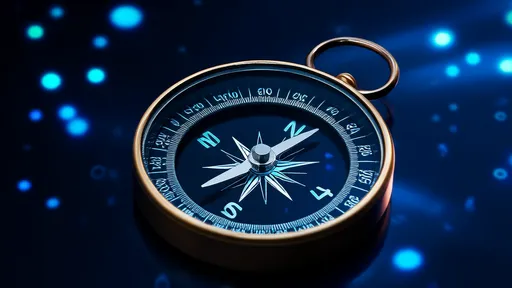
In the quiet predawn hours, when the world still slumbers beneath a blanket of stars, navigators of old would consult their most trusted companion: the magnetic compass. Its needle, dancing with an almost sentient grace, would eventually settle, pointing unerringly toward the magnetic north. For centuries, this simple yet profound instrument has guided explorers across trackless oceans, through dense, uncharted forests, and over vast, featureless deserts. It is a symbol of human ingenuity, a tool that harnesses the very heartbeat of the planet to show us the way. The relationship between the traveler and the compass is one of pure faith—a belief that the needle's whisper is truth.